



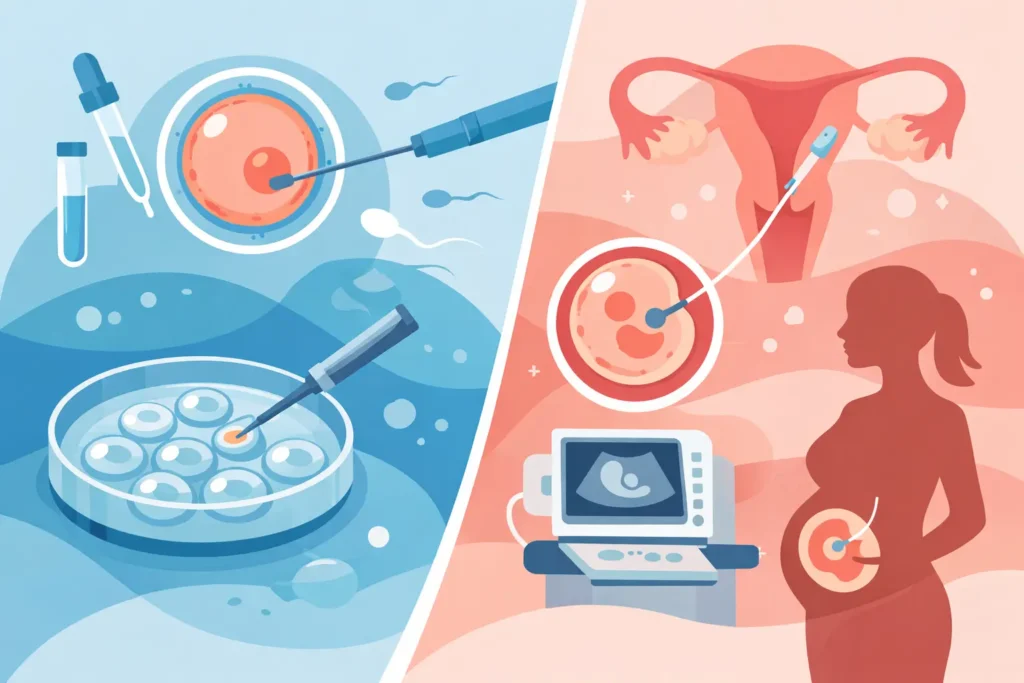
For many people beginning fertility treatment, the difference between IVF and embryo transfer can sound like a matter of terminology. In reality, they describe different parts of a carefully planned treatment journey. IVF creates embryos in the laboratory. An embryo transfer places a selected embryo into the uterus, where it may implant and develop into a pregnancy.
Understanding where one process ends and the next begins can make appointments, medication plans, and decisions about frozen embryos feel more manageable. It also helps set realistic expectations: an embryo transfer is an essential step, but it is not the whole IVF process.
What is IVF?
IVF, or in vitro fertilization, is a fertility treatment in which eggs are collected from the ovaries and fertilized with sperm in a specialized laboratory. The goal is to create embryos outside the body so they can be monitored, developed, and, when appropriate, transferred to the uterus or frozen for later use.
An IVF cycle usually begins with ovarian stimulation. Fertility medications encourage several follicles to mature during the same cycle, rather than the single egg that may naturally mature each month. Your fertility specialist monitors this response with ultrasounds and blood tests, then adjusts the plan when needed.
When the follicles are ready, an egg retrieval procedure is scheduled. The eggs are collected using ultrasound guidance while the patient is under sedation. On the same day, a semen sample is prepared, or previously frozen sperm or surgically retrieved sperm may be used when clinically appropriate.
In the laboratory, eggs and sperm are brought together for fertilization. Some patients may need intracytoplasmic sperm injection, known as ICSI, where one sperm is injected into each mature egg. This can be helpful in certain male-factor infertility situations or when there has been a prior fertilization concern.
The resulting embryos are observed over several days as they develop. Not every egg will be mature, fertilize, or grow into an embryo suitable for transfer or freezing. This is a normal part of human reproduction and one reason a specialist discusses expected outcomes based on age, ovarian reserve, sperm factors, and medical history before treatment begins.
What is an embryo transfer?
An embryo transfer is the procedure that follows embryo creation. A fertility specialist places one embryo into the uterus using a soft, thin catheter passed through the cervix. The procedure is usually quick and does not normally require sedation, although every patient’s comfort and clinical needs are considered.
The embryo may be transferred in the same treatment cycle as egg retrieval, which is called a fresh embryo transfer. Or it may have been frozen and thawed for a later frozen embryo transfer, often called FET. Both approaches can be appropriate. The best option depends on the embryo’s development, the uterine lining, hormone levels, the risk of ovarian hyperstimulation, and your individual treatment plan.
After transfer, progesterone medication is commonly prescribed to support the uterine lining. A pregnancy blood test is scheduled about one to two weeks later, depending on the clinic’s protocol. The waiting period can be emotionally demanding, especially for people who have experienced infertility, miscarriage, or unsuccessful treatment before. Clear instructions and compassionate support matter just as much during this phase as they do in the laboratory.
IVF versus embryo transfer: the key difference
The simplest distinction is that IVF is the broader treatment process, while embryo transfer is one procedure within that process. IVF may include stimulation medication, monitoring, egg retrieval, sperm preparation, fertilization, embryo culture, embryo testing, freezing, and transfer. An embryo transfer uses an embryo that has already been created.
That means a person can have IVF without having an embryo transfer in the same month. For example, embryos may be frozen because the body needs time to recover after stimulation, because preimplantation genetic testing is being performed, or because a patient is preserving fertility for the future. Later, when pregnancy is desired and the uterus is prepared, one of those embryos can be thawed for transfer.
It also means an embryo transfer does not always involve a new egg retrieval. If frozen embryos are available from an earlier IVF cycle, a patient may proceed with FET without repeating ovarian stimulation or egg collection. This distinction is particularly meaningful for patients planning more than one pregnancy or those who have frozen embryos following prior treatment.
The role of embryo freezing and genetic testing
Embryo cryopreservation gives patients more flexibility in timing. Embryos can be frozen after they reach an appropriate stage of development and stored for future use. This may allow treatment to continue after a medical recovery period, a necessary pause, or a decision to pursue pregnancy at a later time.
Some patients also choose IVF with preimplantation genetic testing, or PGT, when there is a known inherited genetic condition, certain chromosome-related concerns, or a clinical reason identified by their specialist. In this process, embryos are biopsied at the appropriate stage and frozen while testing is completed. An embryo selected following the results is then transferred in a later FET cycle.
PGT is not necessary or suitable for everyone. It does not guarantee pregnancy, and the decision should be based on personal circumstances, family history, age, and advice from a qualified fertility team.
Why a fresh or frozen transfer may be recommended
A fresh transfer may be considered when embryos are developing well, hormone levels are appropriate, and the uterine lining appears ready in the same cycle. It can shorten the time between egg retrieval and transfer, which some patients prefer.
A frozen transfer creates separation between embryo creation and pregnancy preparation. This may be recommended when the body needs recovery time, when embryos have undergone PGT, or when a specialist believes the uterine environment may be better supported in a later cycle. In a medicated FET cycle, estrogen and progesterone are used to prepare the lining. In a natural or modified natural FET cycle, timing is coordinated with ovulation.
Neither pathway is automatically better for every patient. A recommendation should reflect your safety, the quality and number of available embryos, your menstrual pattern, prior treatment history, and the clinical findings in that particular cycle.
What embryo transfer does not tell you on its own
It is easy to focus on the transfer as the moment when everything depends on one procedure. Yet implantation is influenced by several factors, including embryo development, chromosome status, uterine receptivity, hormone support, and health considerations that can vary from person to person. Even with excellent care and a well-planned transfer, pregnancy cannot be promised.
For this reason, fertility care should not be reduced to a single laboratory result or transfer day. A thoughtful plan considers the entire picture: how many eggs may be expected, whether sperm testing or ICSI is indicated, whether the uterus needs assessment, how many embryos should be transferred, and whether freezing or testing may serve your goals.
Single embryo transfer is often recommended when appropriate to reduce the health risks associated with multiple pregnancy. Your specialist can explain how embryo stage, age, previous outcomes, and embryo testing results may inform that conversation.
Questions to bring to your fertility consultation
If IVF has been recommended, asking a few focused questions can make the path ahead clearer. You may want to ask whether a fresh or frozen transfer is more suitable, what medication and monitoring are involved, whether there is a reason to consider ICSI or PGT, and what happens to embryos that are not transferred immediately.
It is also reasonable to ask how your clinic supports you after retrieval, during the two-week wait, and if a cycle does not proceed as hoped. Fertility treatment is medical care, but it is also a deeply personal experience. You deserve explanations that are clear, unhurried, and grounded in your own priorities.
At IVcare Fertility, each treatment plan begins with understanding the person or couple behind the diagnosis. Whether your next step is IVF, a frozen embryo transfer, or further investigation before treatment, informed guidance can help you move forward with greater clarity and hope.