



For many people, the question “what is IVF and embryo transfer?” comes after months or years of trying to conceive, receiving unexpected test results, or facing a medical decision that cannot wait. Understanding the process can make a complex path feel more manageable, while also creating space for the emotions that naturally come with it.
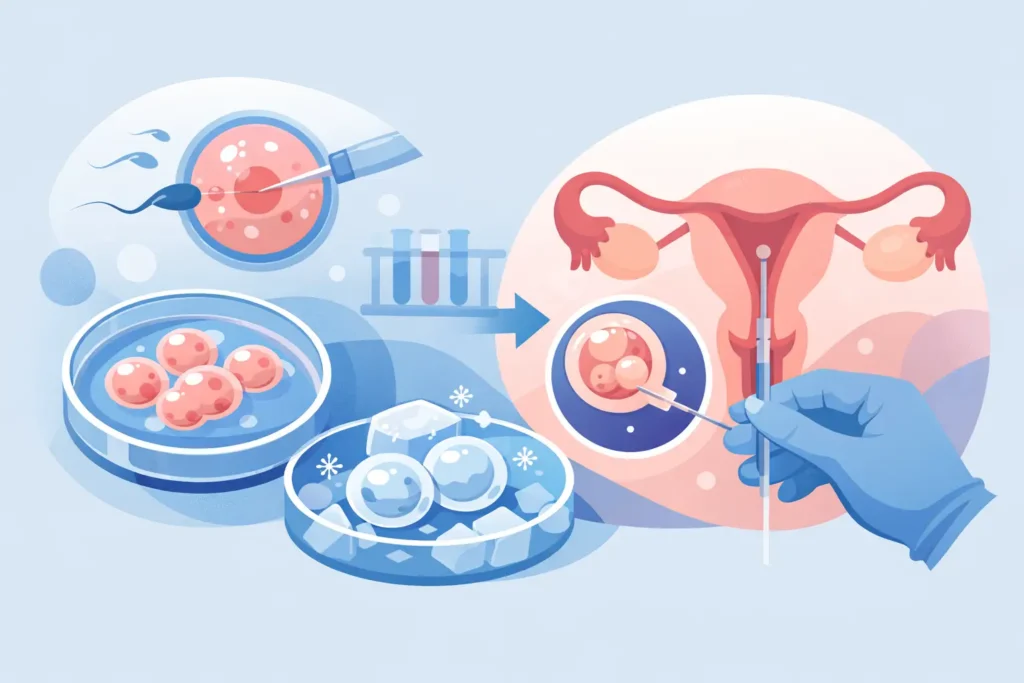
IVF, or in-vitro fertilization, is a treatment in which eggs are collected from the ovaries and fertilized with sperm in a specialized laboratory. The resulting embryos are carefully monitored, and one embryo may later be placed into the uterus through an embryo transfer. These are connected steps, but they are not the same procedure.
What Is IVF and Embryo Transfer?
IVF is designed to support fertilization outside the body when natural conception has not happened or is less likely to happen without assistance. It can be recommended for many reasons, including blocked or damaged fallopian tubes, ovulation concerns, endometriosis, diminished ovarian reserve, male-factor infertility, unexplained infertility, or certain genetic conditions.
Embryo transfer is the final reproductive step of an IVF cycle. It involves gently placing an embryo into the uterus, where it may implant and develop into a pregnancy. The transfer may take place a few days after egg collection in a fresh IVF cycle, or at a later time using an embryo that was frozen and stored. This later approach is called frozen embryo transfer, or FET.
The central goal is simple: to create the best possible conditions for a healthy embryo to implant. Yet every treatment plan is personal. The recommended approach depends on age, fertility test results, medical history, sperm factors, embryo development, genetic considerations, and previous treatment experiences.
The IVF Process, Step by Step
An IVF journey begins well before egg collection. A fertility specialist will first review your health history, menstrual cycles, previous pregnancies or losses, medications, and any prior fertility treatment. Testing may include ultrasound scans, hormone blood tests, semen analysis, and, where appropriate, assessments of the uterus and fallopian tubes.
Ovarian stimulation and monitoring
During a typical IVF cycle, hormone medications encourage the ovaries to mature multiple eggs. In a natural menstrual cycle, usually one egg develops. IVF aims to collect several mature eggs because not every egg will fertilize or develop into an embryo.
You will attend regular monitoring appointments, often involving ultrasound scans and blood tests. These visits help the clinical team adjust medication doses and determine the safest, most effective timing for the next step. The number of follicles seen on a scan does not guarantee the number of eggs or embryos that will result, which is one reason thoughtful counseling matters throughout treatment.
Egg collection and sperm preparation
When the follicles are ready, a final injection triggers egg maturation. Egg collection is usually scheduled about 34 to 36 hours later. Under sedation or anesthesia, a specialist uses ultrasound guidance to collect eggs from the ovaries through the vagina. The procedure itself is generally brief, and patients usually go home the same day with guidance on rest and recovery.
A sperm sample is prepared at the same time, either from a partner or donor where legally and clinically appropriate. For some male-factor fertility concerns, a procedure called intracytoplasmic sperm injection, or ICSI, may be advised. With ICSI, an embryologist injects a single sperm directly into each mature egg to support fertilization.
Fertilization and embryo development
In the laboratory, embryologists check the eggs for signs of fertilization and then observe embryo development over several days. Some embryos may reach the blastocyst stage, usually around day five or six. This stage can provide useful information about development and is commonly used for freezing, genetic testing when indicated, or transfer planning.
It is normal for the number of embryos to decrease through each stage. Not every collected egg is mature, not every mature egg fertilizes, and not every fertilized egg becomes a blastocyst. Clear communication about these possibilities helps patients set realistic expectations without losing sight of hope.
How Embryo Transfer Works
Embryo transfer is usually a quick procedure that does not require sedation. A specialist places a soft, thin catheter through the cervix and into the uterus, then releases the embryo in a carefully selected position. An abdominal ultrasound may be used to guide placement.
Most people describe the procedure as similar to a cervical screening or pelvic examination, although experiences vary. You can generally return home shortly afterward. Your care team will explain whether to continue progesterone or other medicines that support the uterine lining during the implantation window.
A pregnancy blood test is typically scheduled around 9 to 14 days after transfer, depending on the type and stage of embryo transferred. This waiting period can feel particularly long. Physical symptoms, or the absence of them, cannot reliably confirm whether implantation has occurred. Support, rest, and a plan for whom to contact with questions can make this period less isolating.
Fresh versus frozen embryo transfer
A fresh embryo transfer happens in the same cycle as egg collection. It may be suitable when hormone levels, uterine lining development, and clinical circumstances are favorable.
A frozen embryo transfer uses an embryo that was cryopreserved in an earlier cycle. Before transfer, the uterine lining is prepared either through a natural cycle that follows ovulation or through medication that carefully controls timing. A frozen transfer may be recommended when there is a need to allow the body to recover after stimulation, when genetic testing results are pending, or when the lining needs additional preparation.
Neither option is automatically better for every patient. The right choice is based on safety, embryo availability, your treatment history, and your specialist’s assessment of the cycle.
When Genetic Testing May Be Considered
Some patients choose IVF with preimplantation genetic testing, or PGT. This involves testing a small sample of cells from an embryo before transfer. Depending on the type of testing, PGT may be considered for people with a known inherited genetic condition, certain chromosome-related concerns, recurrent pregnancy loss, or previous unsuccessful IVF cycles.
PGT can help identify embryos that may be more suitable for transfer in specific circumstances, but it does not guarantee pregnancy or eliminate every possible genetic risk. It also may not be recommended for everyone. A specialist can explain the potential benefits, limitations, costs, and whether the results are likely to meaningfully influence your decisions.
What Affects the Chance of Success?
Success with IVF and embryo transfer is not defined by one number. Age is an important factor because egg quantity and quality tend to change over time, but it is not the only one. Sperm quality, embryo development, uterine health, underlying diagnoses, lifestyle factors, and the details of a treatment plan can all matter.
A positive pregnancy test is an encouraging milestone, but it is not the same as a live birth. A dependable fertility clinic will discuss outcomes honestly, including the possibility that a cycle may not produce embryos for transfer or that a transfer may not implant. This information is not meant to take away hope. It allows you to make informed decisions and consider next steps with clarity.
Questions and Feelings Deserve Equal Attention
IVF can involve injections, appointments, financial planning, uncertainty, and a great deal of emotional energy. Partners may cope differently, and people pursuing treatment alone can carry a distinct set of pressures. There is no “right” way to feel after a difficult result, a canceled cycle, or a successful transfer that still feels frightening.
Ask practical questions about medication schedules, the number of embryos recommended for transfer, embryo storage, possible side effects, and how your team handles urgent concerns. It is also reasonable to ask how the clinic supports your emotional well-being. Fertility care should be clinically precise and deeply human.
At IVcare Fertility, treatment planning is built around your individual medical needs and family-building goals, with specialist guidance from assessment through transfer and beyond. Whether you are beginning fertility investigations or considering another attempt after a setback, a careful consultation can help turn uncertainty into a plan.
The path to parenthood is rarely measured by a single appointment or test result. Taking one informed next step, with a team that listens and explains, can be a meaningful way to care for both your future and your hope.