



An embryo transfer may take only a few minutes, yet it can carry the weight of years of hope, questions, and difficult decisions. If you are asking, how is embryo transfer done, it helps to know that the procedure itself is usually gentle and straightforward. The careful planning before it, however, is just as important as the transfer day.
Embryo transfer is a key stage of IVF treatment. It is when an embryo created through IVF, either fresh or previously frozen, is placed inside the uterus with the aim of achieving pregnancy. Your fertility specialist will tailor the timing, medications, and number of embryos transferred to your health history, embryo development, and individual treatment plan.
How Is Embryo Transfer Done in IVF?
An embryo transfer is performed in a clinic procedure room and generally does not require anesthesia. Most patients are awake throughout and can go home shortly afterward.
Before the transfer, the embryology team identifies the embryo selected for treatment. This may be an embryo that has developed after a recent egg retrieval, or a frozen embryo that has been carefully thawed for a frozen embryo transfer, often called FET. In some circumstances, embryos may have undergone preimplantation genetic testing before freezing and transfer.
On the day, you may be asked to arrive with a comfortably full bladder. This can help the care team obtain a clearer ultrasound image of the uterus and guide the catheter into the best position.
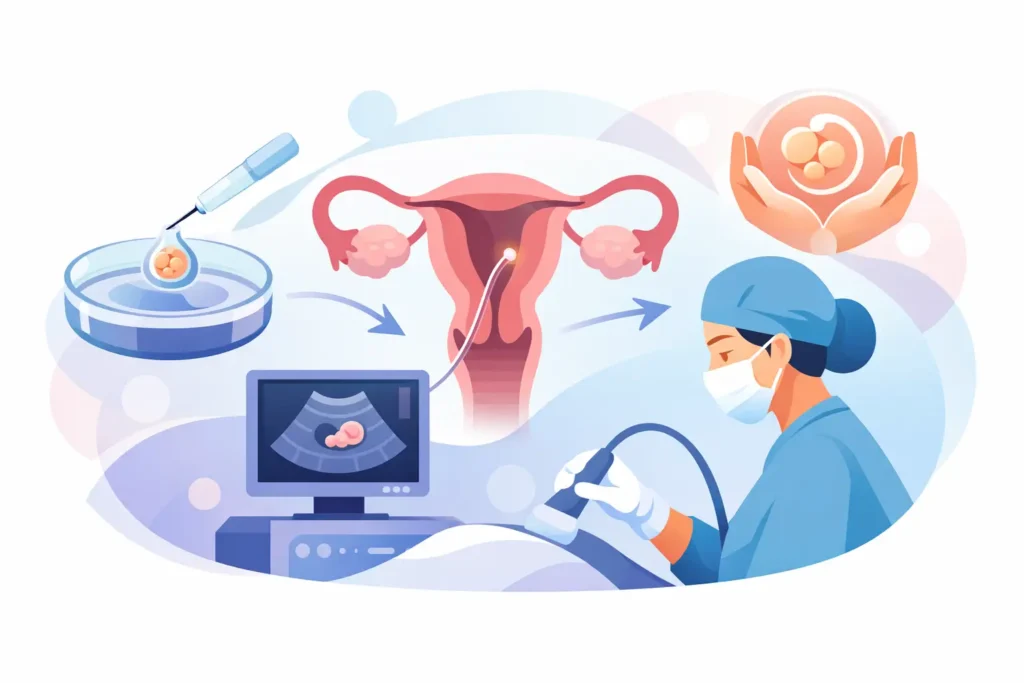
You will lie on an examination bed, similar to the position used for a Pap test. Your specialist gently places a speculum into the vagina to see the cervix. Using ultrasound guidance, the specialist passes a very thin, soft catheter through the cervix and into the uterus. The embryologist loads the selected embryo into the catheter, and the specialist releases it into the uterine cavity.
The procedure is typically painless, although some people experience mild pressure or cramping. The catheter does not enter the fallopian tubes, and the embryo cannot fall out when you stand, walk, use the bathroom, or travel home. Once placed in the uterus, the embryo remains protected within the uterine cavity as implantation begins.
After the catheter is withdrawn, the embryologist checks it under a microscope to confirm the embryo has been transferred. You may rest briefly before receiving instructions on medications, activity, and the date of your pregnancy blood test.
Preparing the Uterus for Transfer
A successful transfer depends on more than placing an embryo in the uterus. The lining of the uterus, known as the endometrium, needs to be receptive at the right time. This is why preparation is closely monitored.
For a fresh embryo transfer, the transfer occurs within the same IVF cycle as egg retrieval. Hormones produced during ovarian stimulation, along with prescribed progesterone, support the uterine lining. Not every fresh IVF cycle is suitable for transfer. If hormone levels are high, the lining is not developing as expected, or there is a concern about ovarian hyperstimulation syndrome, your specialist may recommend freezing all suitable embryos and planning a later FET. Delaying transfer can be a thoughtful clinical decision, not a setback.
For a frozen embryo transfer, the uterus may be prepared in a natural cycle, a modified natural cycle, or a medicated cycle. In a natural approach, the clinic tracks your own ovulation and times the transfer accordingly. In a medicated cycle, estrogen is commonly used to build the lining, followed by progesterone to align the uterus with the embryo’s stage of development.
Ultrasound scans and, when appropriate, blood tests allow the fertility team to assess the lining and confirm the timing. Your medication schedule matters, particularly progesterone. Take it exactly as directed and contact your care team if you miss a dose or are unsure about any instruction.
Which Embryo Will Be Transferred?
The decision about which embryo to transfer is individualized. Embryologists assess embryo development and appearance, while your specialist considers factors such as your age, prior IVF history, medical background, genetic testing results when available, and the number of embryos you have stored.
Many patients are candidates for single embryo transfer. Transferring one embryo can reduce the health risks associated with twin or higher-order pregnancies while still offering a meaningful chance of pregnancy. In some cases, a specialist may discuss transferring more than one embryo, but this should be a careful conversation about potential benefits and risks rather than a routine choice.
An embryo may be transferred at the cleavage stage, usually day 2 or 3 after fertilization, but blastocyst transfer on day 5 or 6 is common. A blastocyst has developed further in the laboratory and may provide more information about embryo progression. Still, no embryo grade or test can guarantee implantation or a healthy pregnancy.
What Happens After the Procedure?
You can usually return to gentle everyday activities after embryo transfer. A long period of bed rest is not proven to improve outcomes, and normal movement will not disturb the embryo. However, your clinic may advise avoiding strenuous exercise, heavy lifting, high-heat activities such as hot tubs, and anything that causes significant discomfort during the waiting period.
Continue progesterone and any other prescribed medication unless your fertility specialist tells you otherwise. Do not stop medication because you have spotting, cramps, or symptoms that feel different from what you expected. Mild cramping, bloating, breast tenderness, fatigue, or light spotting can occur, but these symptoms do not reliably indicate whether implantation has happened. Progesterone itself can also cause pregnancy-like symptoms.
Contact your clinic promptly if you have severe pain, heavy bleeding, fever, shortness of breath, marked abdominal swelling, or any symptom that concerns you. Your team can help determine whether assessment is needed.
The Two-Week Wait and Pregnancy Testing
The days after transfer are often emotionally demanding. You may feel hopeful one moment and guarded the next, especially after a long fertility journey or previous disappointments. It is understandable to want answers immediately, but home pregnancy tests taken too early can be misleading.
Your clinic will schedule a blood test to measure human chorionic gonadotropin, or hCG, at the appropriate time after transfer. This test is more reliable than interpreting symptoms or testing early at home. If the result is positive, repeat blood work and an early ultrasound may be arranged to monitor the pregnancy.
A negative result can be deeply painful. It also does not mean you have failed or that future treatment cannot work. Your fertility specialist can review the cycle in detail, including embryo factors, uterine preparation, medication timing, and whether changes may be appropriate for a future transfer. Sometimes a clear explanation is available; sometimes there is no single reason. Both situations deserve honest, compassionate support.
Questions to Bring to Your Fertility Consultation
Before transfer, ask about the type of cycle recommended for you, why a particular embryo has been selected, and whether single embryo transfer is appropriate. It is also helpful to understand which medications you will take, what side effects to expect, when you can test for pregnancy, and who to contact after hours if you are worried.
At IVcare Fertility, embryo transfer is approached as more than a final procedural step. It is part of a carefully coordinated plan shaped around your medical needs, your embryos, and your hopes for a family.
There is no perfect way to feel during an embryo transfer cycle. Give yourself permission to ask questions, follow the plan one day at a time, and lean on trusted support while your care team helps you move toward the possibility of a new beginning.