



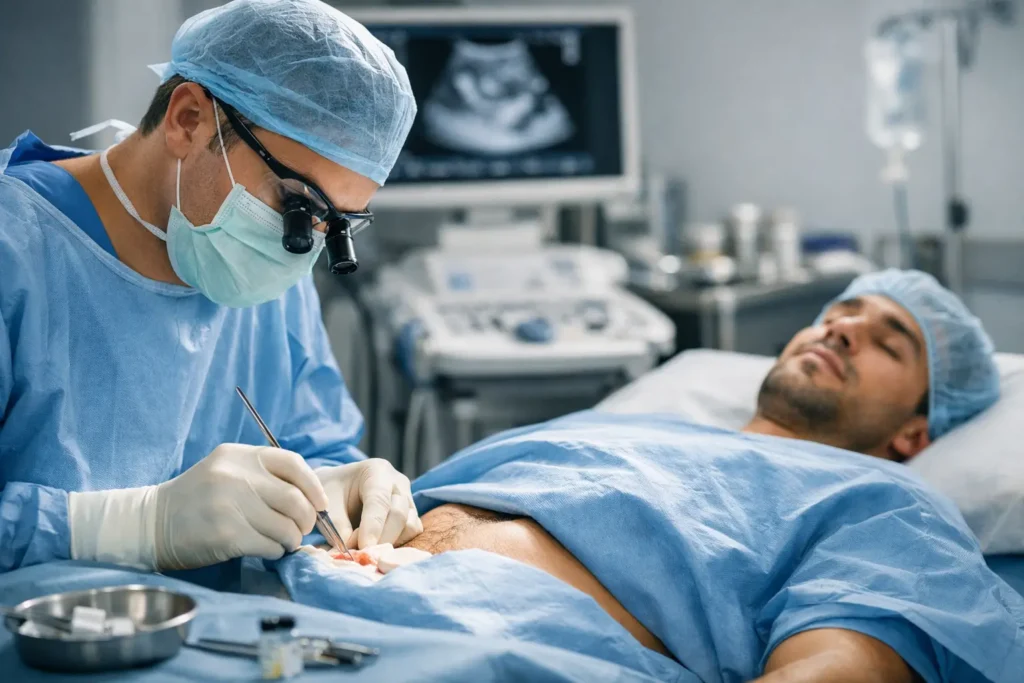
A semen analysis showing no sperm can be an upsetting result, but it does not always mean that biological parenthood is out of reach. A surgical sperm retrieval procedure may allow a fertility specialist to collect sperm directly from the epididymis or testicle for use in assisted reproduction. For many men and couples, this can create a carefully considered path forward when sperm are not present in the ejaculate.
When surgical sperm retrieval may help
Surgical sperm retrieval is most often considered for azoospermia, the medical term for no sperm being detected in a semen sample. Azoospermia has different causes, and identifying the cause matters because it influences which retrieval approach may be appropriate and what the chances of finding sperm may be.
In obstructive azoospermia, sperm production may be normal, but a blockage prevents sperm from reaching the ejaculate. This can occur after a vasectomy, infection, injury, prior surgery, or because the vas deferens did not develop. In these situations, sperm may be present in the epididymis or testicle and can often be retrieved.
In nonobstructive azoospermia, the challenge is reduced sperm production within the testicles. Sperm may be produced only in small, scattered areas of testicular tissue. Retrieval can still be possible, but it is more complex and outcomes vary significantly between individuals.
The procedure may also be discussed when ejaculation is not possible due to certain neurological conditions, when sperm cannot be obtained by other methods on the day of IVF treatment, or when a man needs fertility preservation before medical treatment that could affect sperm production.
Before a surgical sperm retrieval procedure
A thoughtful evaluation comes first. Your fertility specialist will review your medical history, prior surgeries, childhood testicular health, medications, and previous semen analysis results. Blood tests may assess reproductive hormones, while a physical examination and ultrasound can provide further information about the testes and possible obstruction.
For some men, genetic testing is clinically useful. Karyotype testing and Y-chromosome microdeletion screening may be recommended in nonobstructive azoospermia. If the vas deferens is absent from birth, testing related to cystic fibrosis gene variants may also be appropriate. These results can affect treatment planning and may lead to a recommendation for genetic counseling before IVF.
This stage is not simply about deciding whether to proceed. It is an opportunity to understand the likely cause of infertility, discuss alternatives, and make decisions as a couple with clear expectations. Depending on the clinical picture, a specialist may recommend treatment for a reversible cause, sperm retrieval, donor sperm, or a different approach.
Types of sperm retrieval procedures
The best technique depends on whether sperm are expected in the epididymis, whether obstruction is suspected, and how much sperm production is likely to be present. Your care team will explain why one method is more suitable than another.
PESA and MESA
Percutaneous epididymal sperm aspiration, or PESA, uses a fine needle to collect fluid from the epididymis, the small structure where sperm mature and are stored. It is commonly considered when there is an obstruction beyond the epididymis. The procedure is usually performed with local anesthesia.
Microsurgical epididymal sperm aspiration, known as MESA, involves a small incision and use of a surgical microscope to collect sperm directly from the epididymis. It can provide a larger number of sperm for freezing in some cases, though it is a more involved surgical procedure than PESA.
TESA, TESE, and micro-TESE
Testicular sperm aspiration, or TESA, collects tissue or sperm from the testicle using a needle. Testicular sperm extraction, or TESE, involves a small incision to remove a sample of testicular tissue for examination in the laboratory.
For men with nonobstructive azoospermia, micro-TESE may offer the most targeted approach. Using an operating microscope, the surgeon identifies tubules that appear more likely to contain sperm, aiming to maximize the chance of retrieval while minimizing the amount of tissue removed. Micro-TESE is generally performed under anesthesia in an operating room setting.
Not every man needs the most complex procedure. Conversely, selecting a less invasive technique is not always the best choice when the pattern of infertility suggests that sperm may be difficult to find. The right recommendation is individualized.
What happens on the day
The process is planned around your wider fertility treatment. If fresh sperm will be used, retrieval may be coordinated with your partner’s egg collection. In other situations, sperm can be retrieved and frozen in advance, giving both partners more flexibility about when to begin IVF.
The type of anesthesia varies. A needle aspiration may be completed with local anesthesia, sometimes with sedation. Open surgical procedures, particularly micro-TESE, may require general anesthesia. Your team will provide fasting instructions when needed and explain when you can safely return home.
Once tissue or fluid is collected, embryologists examine it in the laboratory to look for viable sperm. If sperm are found, they may be used fresh for intracytoplasmic sperm injection, or ICSI, or frozen for future use. ICSI involves injecting a single sperm directly into an egg and is usually necessary because surgically retrieved sperm may not be present in sufficient numbers or have the motility needed for conventional IVF insemination.
If no sperm are identified during the procedure, the fertility team will discuss the findings with sensitivity and clarity. This possibility can be difficult to contemplate, especially after a long fertility journey. Discussing contingency plans before treatment, including whether donor sperm is an option you would wish to consider, can help reduce pressure on an already emotional day.
Recovery, comfort, and possible risks
Many men return home on the same day. Mild discomfort, swelling, bruising, or tenderness around the scrotum can occur for several days. Supportive underwear, rest, cold packs used as directed, and prescribed or recommended pain relief can help with comfort.
Recovery advice differs according to the procedure, but patients are commonly asked to avoid strenuous exercise, heavy lifting, and sexual activity for a short period. A specialist will give instructions based on the technique used and your individual recovery. Contact the clinic promptly for worsening pain, fever, excessive swelling, bleeding, or any concern that feels unusual.
Complications are uncommon but can include infection, bleeding, hematoma, pain, and temporary swelling. More extensive procedures can carry a small risk of affecting testosterone production, particularly when substantial tissue is removed or when testicular function is already reduced. This is one reason specialist assessment and careful surgical technique matter.
Understanding outcomes beyond sperm retrieval
Finding sperm is an encouraging milestone, but it is only one part of the treatment pathway. Pregnancy outcomes also depend on egg quality, age of the egg provider, embryo development, uterine factors, laboratory methods, and the underlying cause of infertility. No clinic can responsibly promise that retrieval will lead to fertilization, embryos, or pregnancy.
Freezing retrieved sperm can be helpful when enough sperm are available. It may avoid repeating a procedure for later IVF cycles and can reduce the stress of coordinating retrieval with egg collection. However, some samples yield only enough sperm for immediate use, so this decision depends on the laboratory findings.
A shared consultation gives you space to ask practical questions: Which technique is recommended and why? Will sperm be used fresh or frozen? What are the alternatives if sperm are not found? How will the retrieval be coordinated with IVF and ICSI? Clear answers can make a highly technical process feel more manageable.
For people facing male-factor infertility, a surgical sperm retrieval procedure is not simply a medical intervention. It can be a meaningful opportunity to pursue a genetic connection while receiving care that recognizes the uncertainty, courage, and hope carried by every fertility journey. A specialist-led plan can help you take the next step with information, support, and compassion.